Parking Approvals as a Step in the Meeting Booking Workflow
How Ejtma makes a guest parking request a step in the meeting booking workflow, with approver reminders and automatic rejection of requests left past deadline.
A finance director from a partner company is coming for an 11:00 meeting. Two days earlier, the host's assistant asked for a parking space for him in a message to the parking officer. The message arrived and the officer read it, then dozens of later messages buried it. At 10:50 the guest calls from outside the gate, because his name is not on the parking list.
Nobody rejected the request, and nobody decided on it at all. That is the difference between a request that passes through a chat and a request with a fixed place in the booking workflow.
Parking as a step in the booking workflow
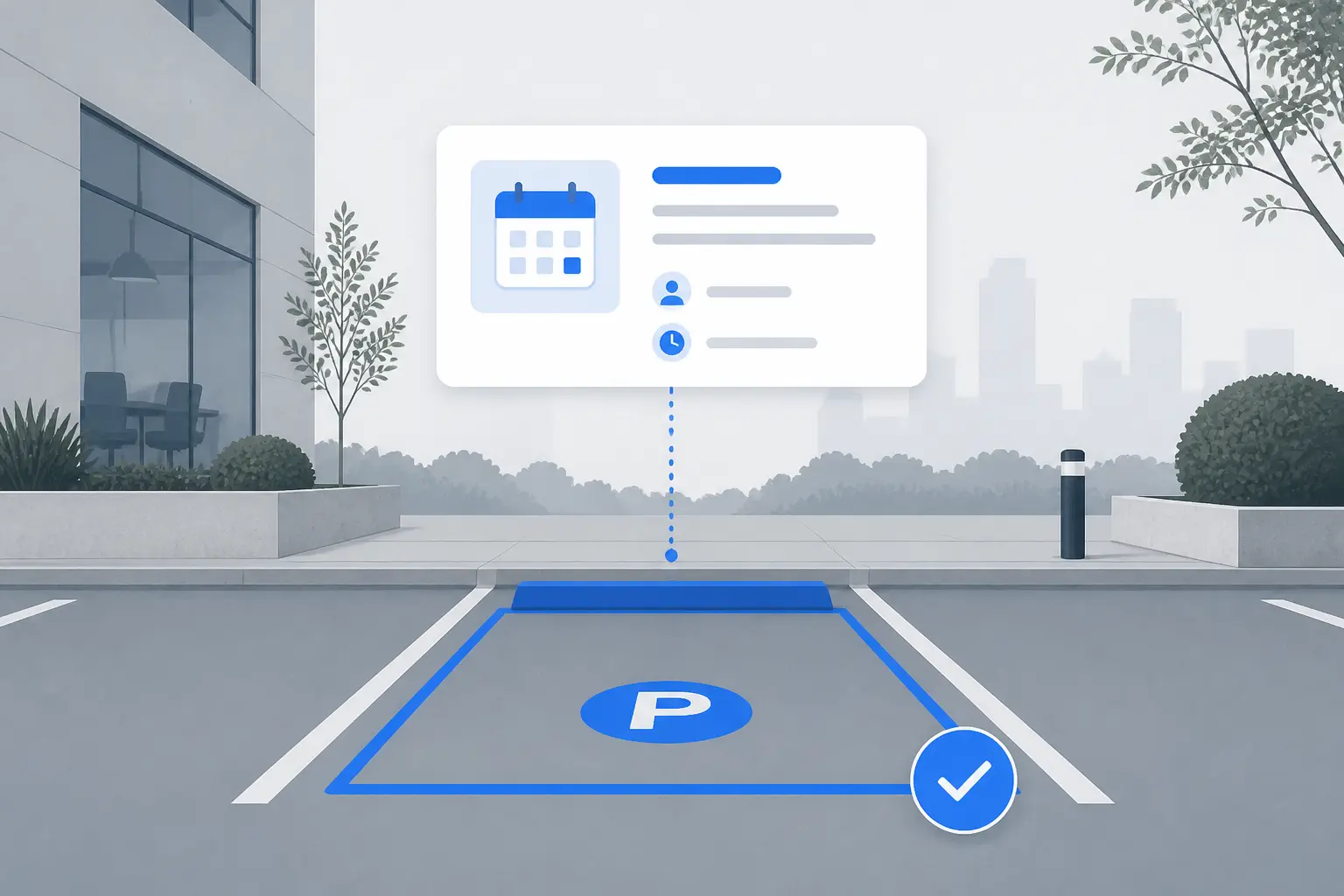
In Ejtma, a parking request is a step in the meeting booking workflow, not a side message. When an employee books a meeting for a guest who is driving, the parking request enters the steps the booking goes through and reaches the approver responsible for parking.
Two things change. The request now has a known decision maker, not a shared inbox read by whoever has time. And the request is tied to a booking with a time and a host, so the approver knows who the space is for and when the guest needs it without asking.
In a building with few visitor spaces, the approver sees requests ahead of time and decides between them. A rough example: a building has thirty visitor spaces, and parking requests reach forty on a day of large meetings. Without a clear workflow, spaces go to whoever arrives first. With a workflow and an approver, the officer knows the demand before the day, allocates spaces by meeting priority, and tells the rest early.
Reminders instead of manual follow-up
It is not enough for the request to be in the right place. The person who decides has to remember it. Ejtma sends approvers reminders at 24, 48, and 72 hours, by email and SMS.
SMS matters for parking in particular. The parking officer is usually not sitting in front of email all day but moving between the gate and the office. A reminder that reaches the officer's phone reaches them wherever they are.
The host's assistant no longer has to send a follow-up message, then a second one, then call the officer. Reminders are part of the workflow and arrive on schedule without anyone asking for them.
Automatic rejection of stuck requests
Some requests reach their deadline without a decision, because the approver is on leave or the request was unclear. In that case Ejtma rejects the request automatically.
Automatic rejection can seem harsh, but it beats the alternative. A pending request hides the truth until the guest reaches the gate. A rejection on time gives the host a clear answer and a chance to act: point the guest to a nearby public car park, suggest a taxi, or ask another part of the building for a space. An early answer, even a rejection, saves the guest from standing at the gate.
Decisions before switching it on
Before switching on parking approvals, an organization needs two decisions. The first is who has authority to allocate visitor spaces, and who covers when that person is away, so that requests do not all end in automatic rejection during one week of leave. The second is how many spaces to set aside for visitors each day, and which meetings get priority when requests exceed spaces.
It also helps to review the last ten guests who arrived without a space ready. In how many cases did the officer actually reject the request, and in how many did nobody decide? If most were the second kind, the problem is not the number of spaces but a request with no deadline and no decision maker.
Parking is part of the guest's path
The guest who found no parking space is usually the same guest reception did not know was coming. The visitor's path from invitation to visit rating is covered in visitor management in Ejtma. And because the parking request is tied to the meeting booking, it depends on a correct booking that does not conflict with others, the subject of meeting room booking conflicts.
You can learn more about Ejtma and how it manages meetings and visitors.