Meeting Room Booking Conflicts, and How They Are Resolved
Two meetings on one room is a daily problem in organizations. Why conflicts happen when rooms are booked by email and shared calendars, and how a booking system prevents them.

Meeting Room Booking Conflicts, and How They Are Resolved
A familiar scene in many organizations: two teams arrive at the same room at the same time, each holding what they believe is a confirmed booking. A negotiation starts over who stays and who leaves, and the first quarter of an hour of two meetings is lost to a dispute unrelated to either agenda. The conflict here is not poor organization by individuals; it is a natural result of the booking method itself.
Why the conflict happens at all
Booking by email, a shared calendar, or a sheet on the door lacks a single reference that knows a room's status in real time. The employee making a booking does not necessarily see what someone else booked minutes earlier, so their booking is built on stale information. The more rooms and branches there are, the wider this gap grows, until conflict becomes the rule rather than the exception at peak times.
The deeper problem is that the method has no concept of "confirmation". A booking in a shared calendar is a suggestion seen by whoever sees it, not a commitment that blocks others. As long as no one holds the final word on a room, every booking stays vulnerable to being overridden by another that its owner does not know about.
How the system prevents conflict
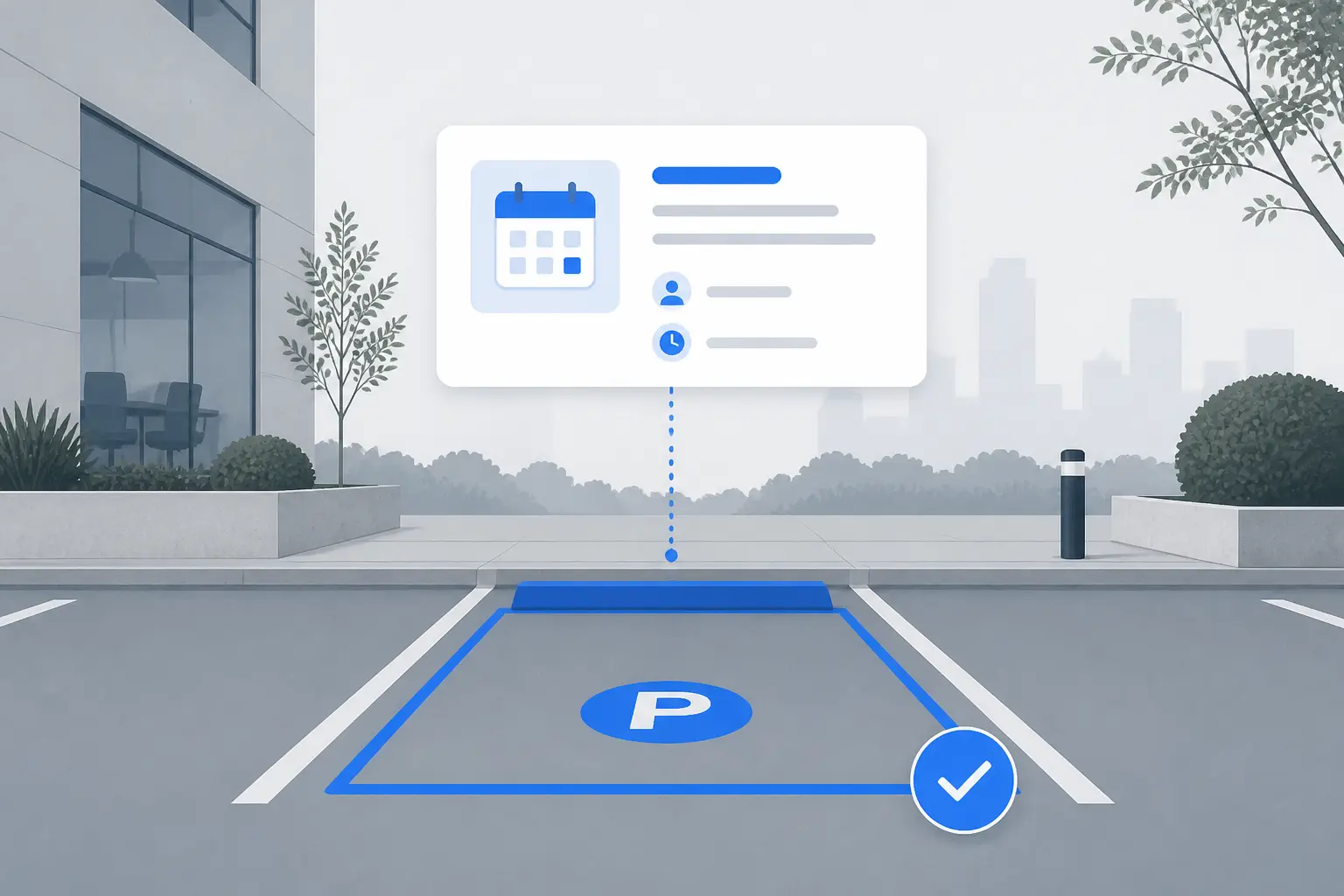
A room booking system gives each room a single reference that knows its status at every moment. When an employee requests a room for a time that is already taken, the request is not accepted in the first place, so the conflict disappears at its root rather than being discovered at the door. The information everyone sees is one and up to date, so a booking is not built on an old picture of reality.
Beyond preventing conflict, the system adds a layer of approvals where the organization needs it: some rooms are open to direct booking, and some pass through a manager's approval. This turns booking from a race the fastest wins into an organized process with clear rules everyone knows in advance.
Conflict is not the only problem
Preventing conflict solves half the problem; the other half is the booked room no one shows up to, which stays locked and unused while another team waits for it. We covered this side in meeting-room screens and the no-show booking.
The practical step
Watch your rooms for a single week and record how many times a conflict or dispute over a room occurred. If it recurs, the answer is not reminding employees to coordinate, but giving rooms a single reference that prevents conflict before it happens.
Start now and give your rooms one reference that prevents conflicts before they happen.